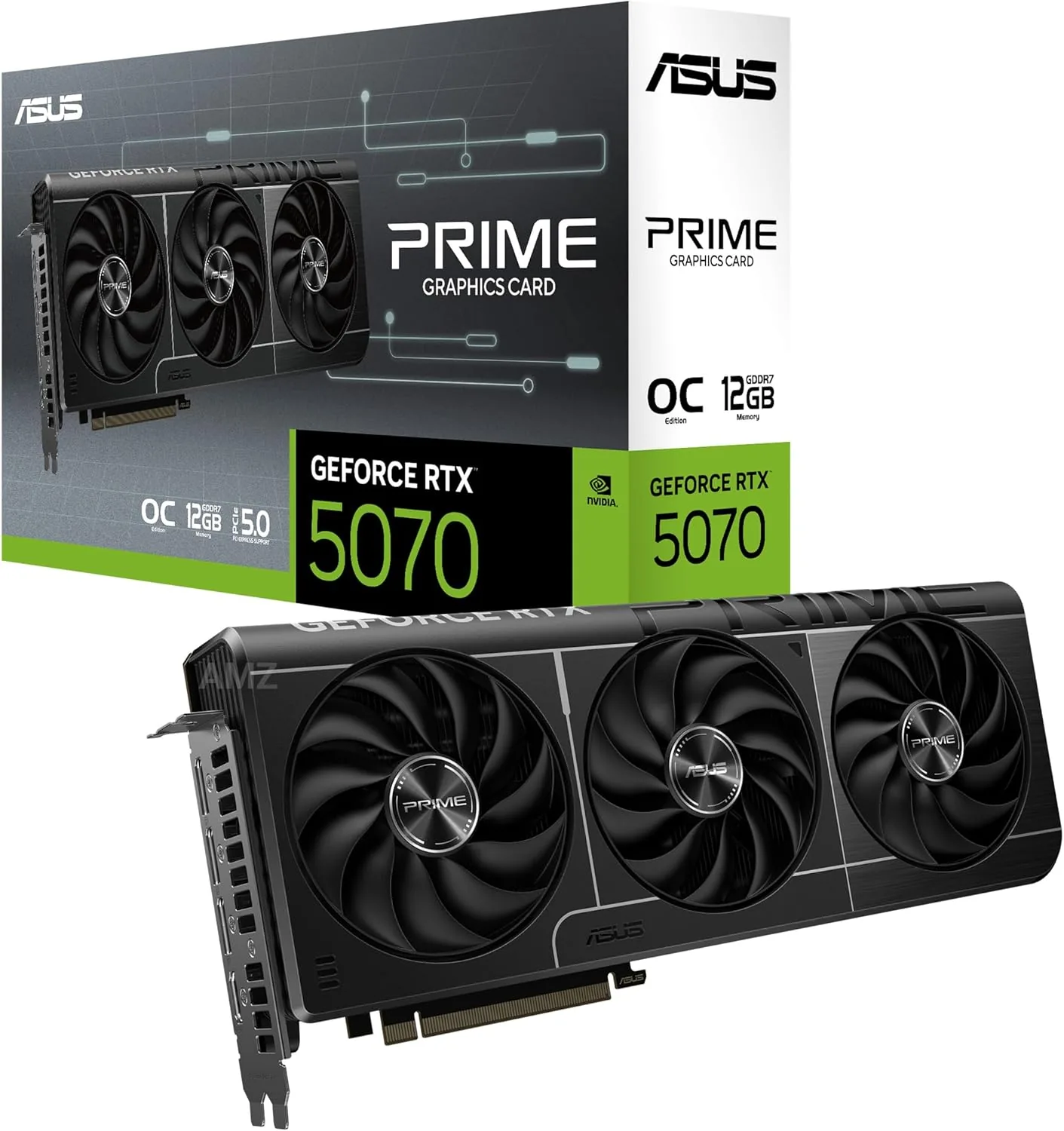
Best Overall
Asus Prime NVIDIA GeForce RTX 5070
Best for: 1440p high-refresh gaming
9.0/10View on Amazon →

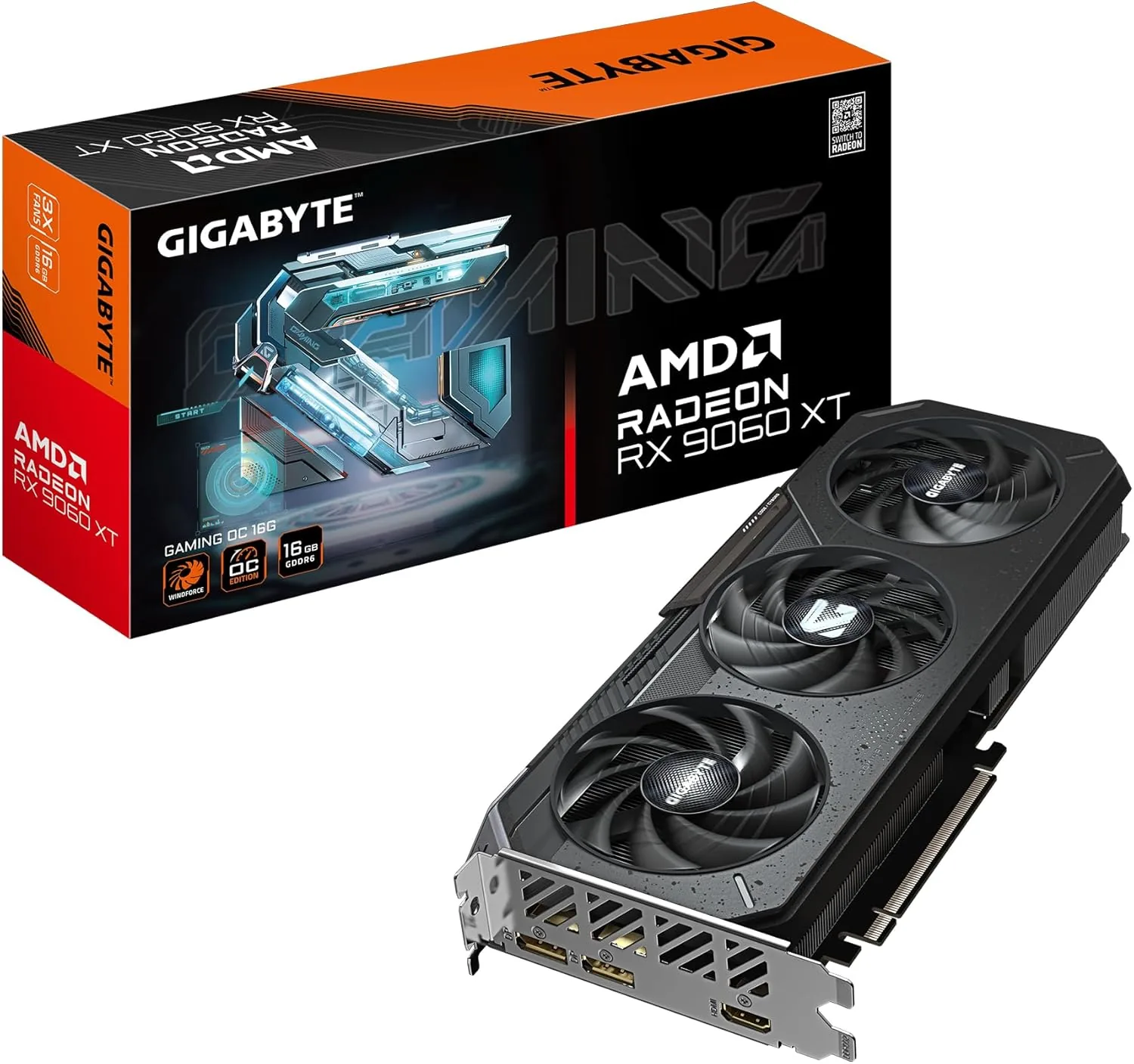
AMD's RX 9060 XT brings the RDNA 4 architecture and FSR 4 upscaling to a budget price. Pick the 16GB version and you get plenty of memory for 1080p and 1440p gaming for years to come.
The Radeon RX 9060 XT is AMD's budget card for this generation, and the 16GB version is one of the best-value graphics cards for 1080p and 1440p gaming. It brings AMD's RDNA 4 architecture, much-improved ray tracing and FSR 4 upscaling to a far lower price than the RX 9070 series.
The RX 9060 XT has 32 compute units, 16GB of GDDR6 memory on a 128-bit bus and 32MB of Infinity Cache, which makes up for some of the narrow bus. In published testing the 16GB model performs very close to NVIDIA's RTX 5060 Ti 16GB in conventional games, usually within a few percent either way. It runs most games at high or maximum settings at 1080p and handles 1440p well with FSR turned on.
Ray tracing is much better than on AMD's previous budget cards, but NVIDIA's RTX 5060 Ti is still faster in ray-traced games. Our RTX 5060 Ti 16GB vs RX 9060 XT 16GB comparison goes through the trade-offs.
Like NVIDIA, AMD sells the RX 9060 XT with either 8GB or 16GB of memory under the same name. The 16GB card costs a little more but is far better: several recent games need more than 8GB at high texture settings, and the 8GB card stutters or loads blurry textures when it runs out. Check that the listing says 16GB.
FSR 4 is AMD's first upscaler driven by machine learning, and image quality is a big step up from FSR 3, with far less shimmering on fine detail. It's exclusive to RDNA 4 cards. Support is growing, and AMD's driver can upgrade many FSR 3.1 games to FSR 4 automatically.
The 9060 XT 16GB draws around 160W to 182W depending on the model, and most cards, including this Gigabyte one, need only a single 8-pin connector. They run cool and quiet, and a 500W to 550W power supply is enough for most builds. Unlike NVIDIA's budget cards, it uses a full 16-lane PCIe connection, so there's no performance penalty on older PCIe 3.0 motherboards.
Buy the RX 9060 XT 16GB for a budget gaming PC if you want plenty of memory and mainly play without heavy ray tracing. It's also a good upgrade for older PCs thanks to the full PCIe link. If ray tracing or DLSS support matters more, the RTX 5060 Ti 16GB is the alternative.
| Architecture | AMD RDNA 4 |
|---|---|
| Compute units | 32 (2,048 stream processors) |
| Boost clock | Up to 3,130MHz (reference) |
| VRAM | 16GB GDDR6 |
| Memory speed | 20Gbps |
| Memory bus | 128-bit |
| Memory bandwidth | 320GB/s |
| Infinity Cache | 32MB |
| Interface | PCI Express 5.0 x16 |
| Total board power | 160-182W (model dependent) |
| Outputs | HDMI 2.1b, DisplayPort 2.1a |
AMD's RX 9060 XT brings the RDNA 4 architecture and FSR 4 upscaling to a budget price. Pick the 16GB version and you get plenty of memory for 1080p and 1440p gaming for years to come. It earns our Best Budget AMD award in our guide to the best graphics cards.
Check price on Amazon →Best for: 1440p high-refresh gaming
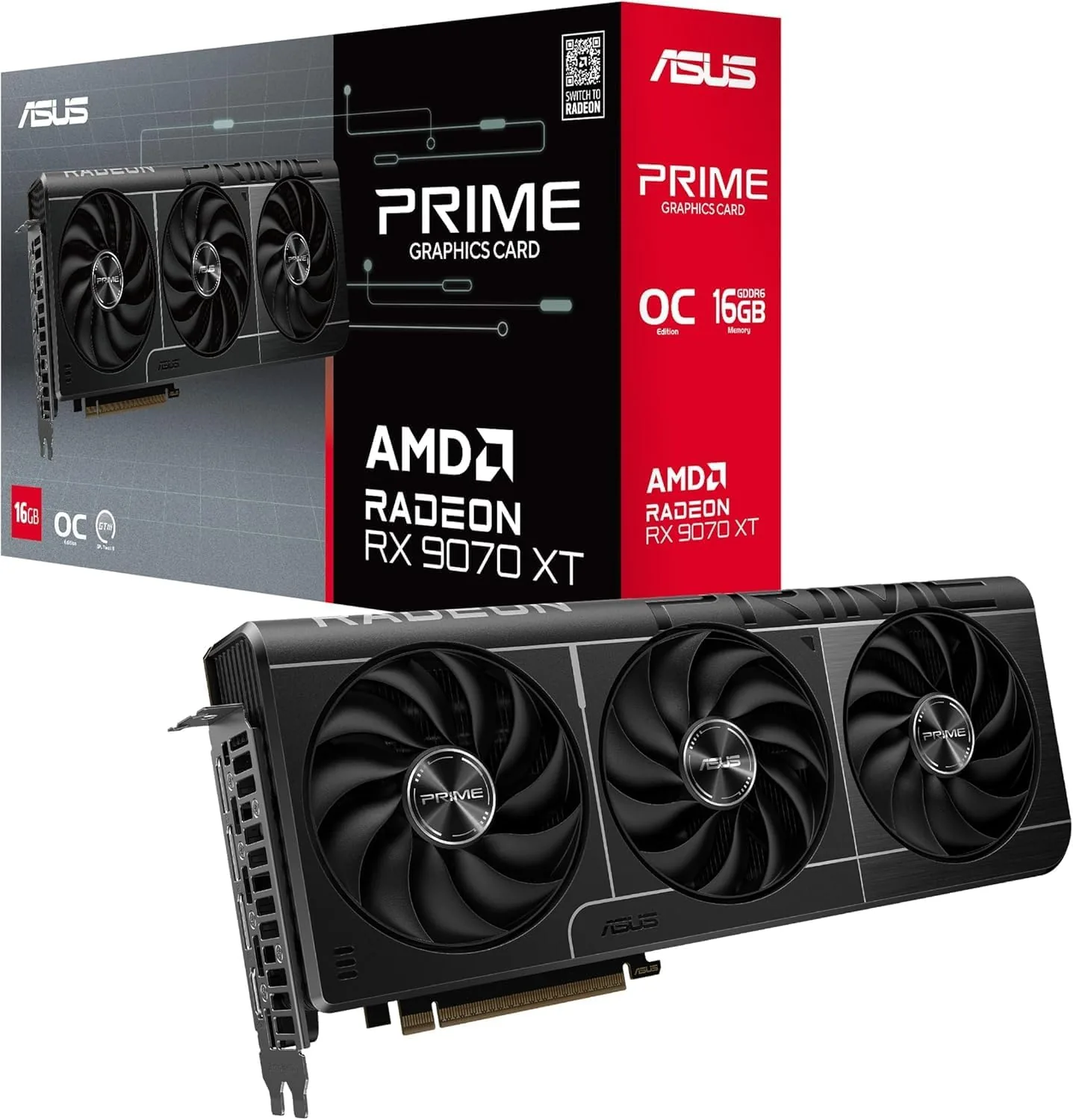
Best for: 1440p and entry-level 4K gaming
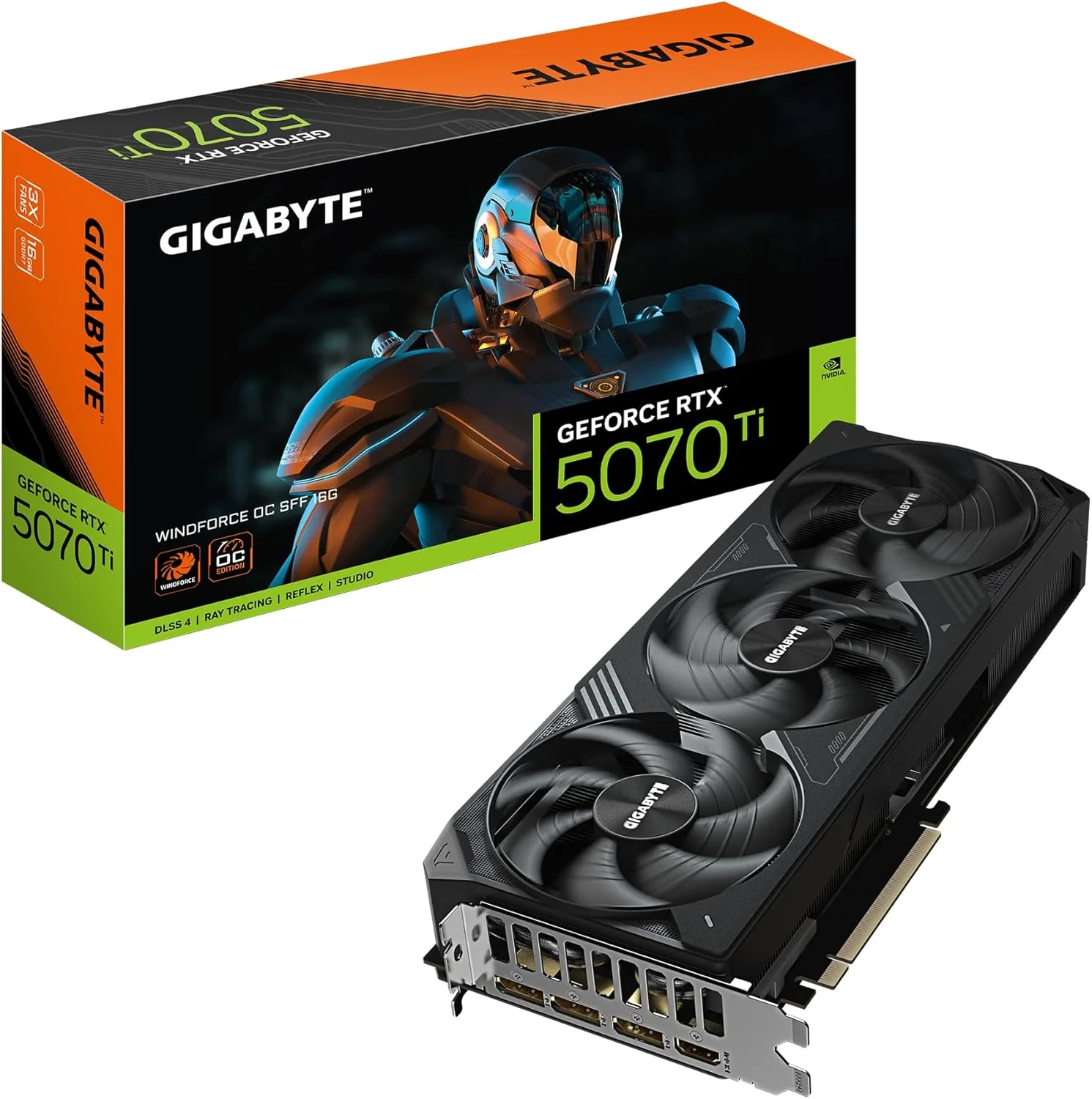
Best for: Maxed-out 1440p and 4K with DLSS